
Playing at the Club.
- The bowls season runs from April until the end of September to tie in with all UK lawn green bowls activities and Bowls England competitions, (although we have an all-weather surface members can play all year round, we also attract winter members from other clubs in Dorset as their grass greens close for 6 months at the end of the season).
- We organise a range of fixtures from friendly matches, internal club competitions and Dorset leagues.
- Typically, new bowlers will play in ‘roll ups’ which gives them a chance to practice and play with fellow club members, there are many opportunities for new and experienced bowlers to play at a level they feel comfortable.
- But we don’t just play bowls, we have a healthy social calendar for members in the clubhouse which can include quiz nights, horse racing evening and other member functions.

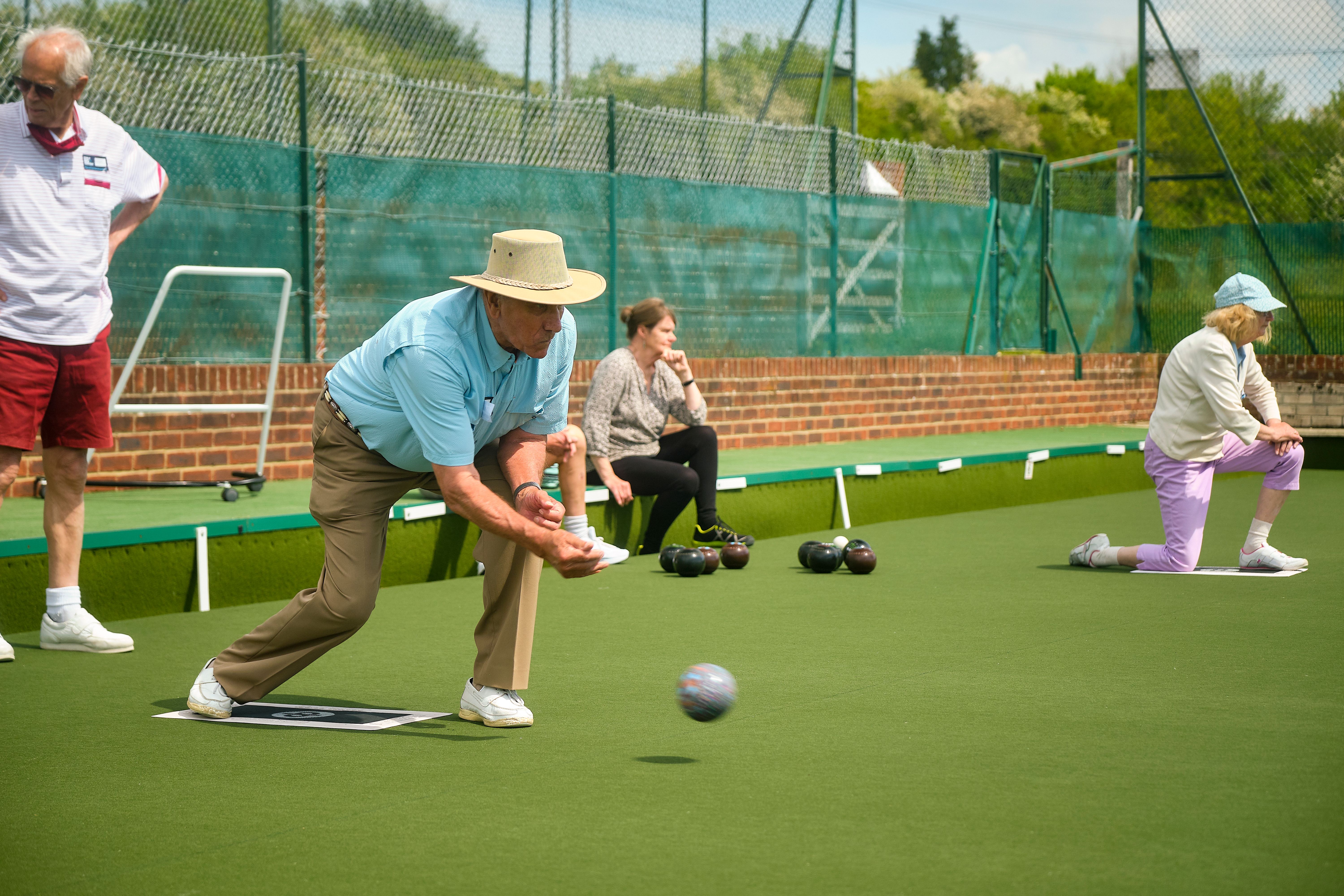
Playing Bowls
- Players deliver their bowls alternatively from a mat at one end of the rink, towards a small white or yellow ball called a jack at the other end.
- The object is to get one or more bowls closer to the jack than those of the opposition - one point is scored for each counting bowl. After playing all the bowls in one direction, and agreeing the score, the direction of play is reversed - the next end is played back down the rink in the opposite direction.
- The bowls are shaped so that they do not run in a straight line, but take a curved path towards the jack, which is also called the Bias. It is therefore delivered to the jack not at it.
- To be successful the bowl must be delivered with the correct weight, along the correct line, curved path towards the jack is also called the Bias. It may be delivered either forehand or backhand. (In right handed players forehand is a line to the right of the jack with the bowl curving inwards to the left, backhand is a line to the left of the jack curving inwards to the right.)
Types of Game.
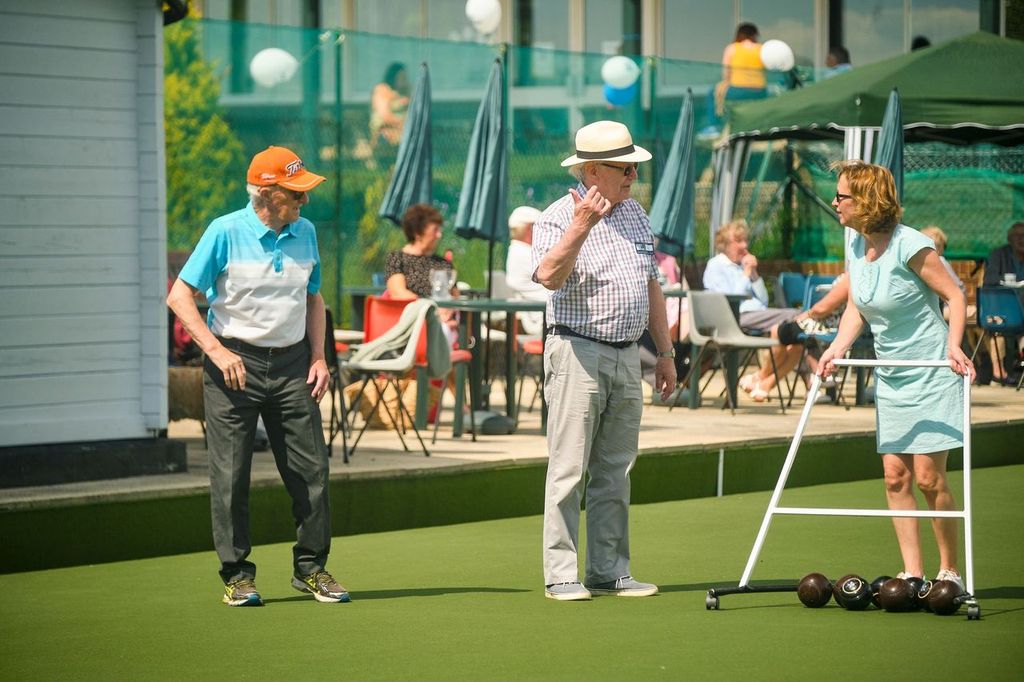
- Bowls can be played as singles, or in teams of pairs, triples or fours (a team of four is also known as a 'rink'). In fours or rinks games, each team member has a particular role to play
- The First, or Lead, places the mat, delivers the jack and centres it before attempting to bowl as close as possible to the jack.
- The Second, or Two keeps the scoreboard up to date. The two will normally be required to improve or consolidate the position achieved by the lead.
- The Third, or Three may be called upon to play different types of shots in order to score more, or to place bowls tactically to protect an advantage. The three also advises the skip on choice of shots, and agrees the number of shots scored, measuring if required.
- The Skip is in overall charge of the rink, directs the other players on choice of shot, and tries to build the 'head' of bowls to his or her advantage. The Skip is also responsible for keeping the score card up to date throughout the game liaising with the opposing team's Skip.
- In Fours or Rinks play, the Lead, Two, Three and Skip each delivers two bowls for 21 ends.
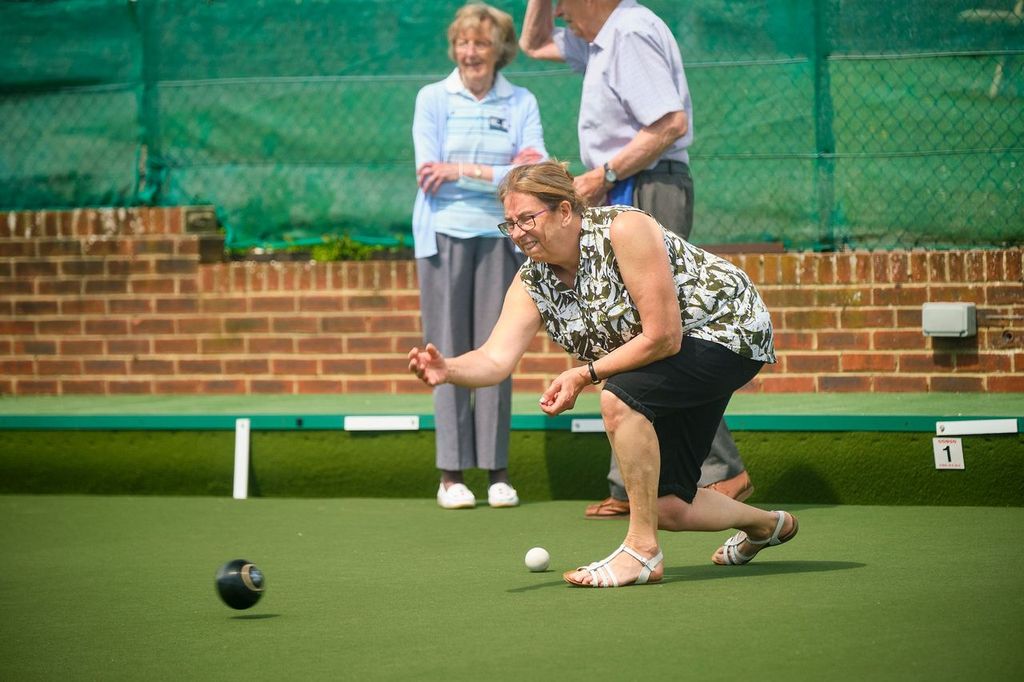
Other Types of Game.
- In Singles, the two opponents deliver four bowls alternatively. The first to reach 21 shots is the winner.
- For Pairs, the players deliver four bowls each. The team scoring the most shots after 21 ends is the winner.
- In the Triples game, the lead, second and skip deliver three bowls for 18 ends.
Short Mat Bowls
- The game is played in broadly the same way, provides the same enjoyment and has the same attractions as lawn bowls and, indeed, many players participate in both games.
- The bowls themselves, and the smooth soled heel less footwear are the same as those used outdoors.
- The object is for each player in a singles game or each team in a pairs, triples or fours to gain as many shots as possible by getting their bowls nearer to the jack than their opponents, and so outscore them.
- The main differences in the playing conditions are the size of the playing area, the block that occupies the mid-position of the rink mat, and the ditch, which is actually a defined area of the mat surface.
- The intimidatory presence of the block, which prevents players from playing with force directly towards an opponents bowl to knock it out of a scoring position, and the narrow playing area, requires players to develop skill in using the natural bias on the bowls to bowl round the block.
- Bowls that touch the block, and those that come to rest in the dead area or in the ditch (other than those that touch the jack before going into the ditch) are declared "dead" and removed from the mat before the next bowl is delivered.
- The primary skill requirement is in the fact that no two mats perform identically and all village halls have floors that are not perfectly flat therefore every competitive match is a measure of the ability of the visiting team to conquer an unfamiliar playing surface.
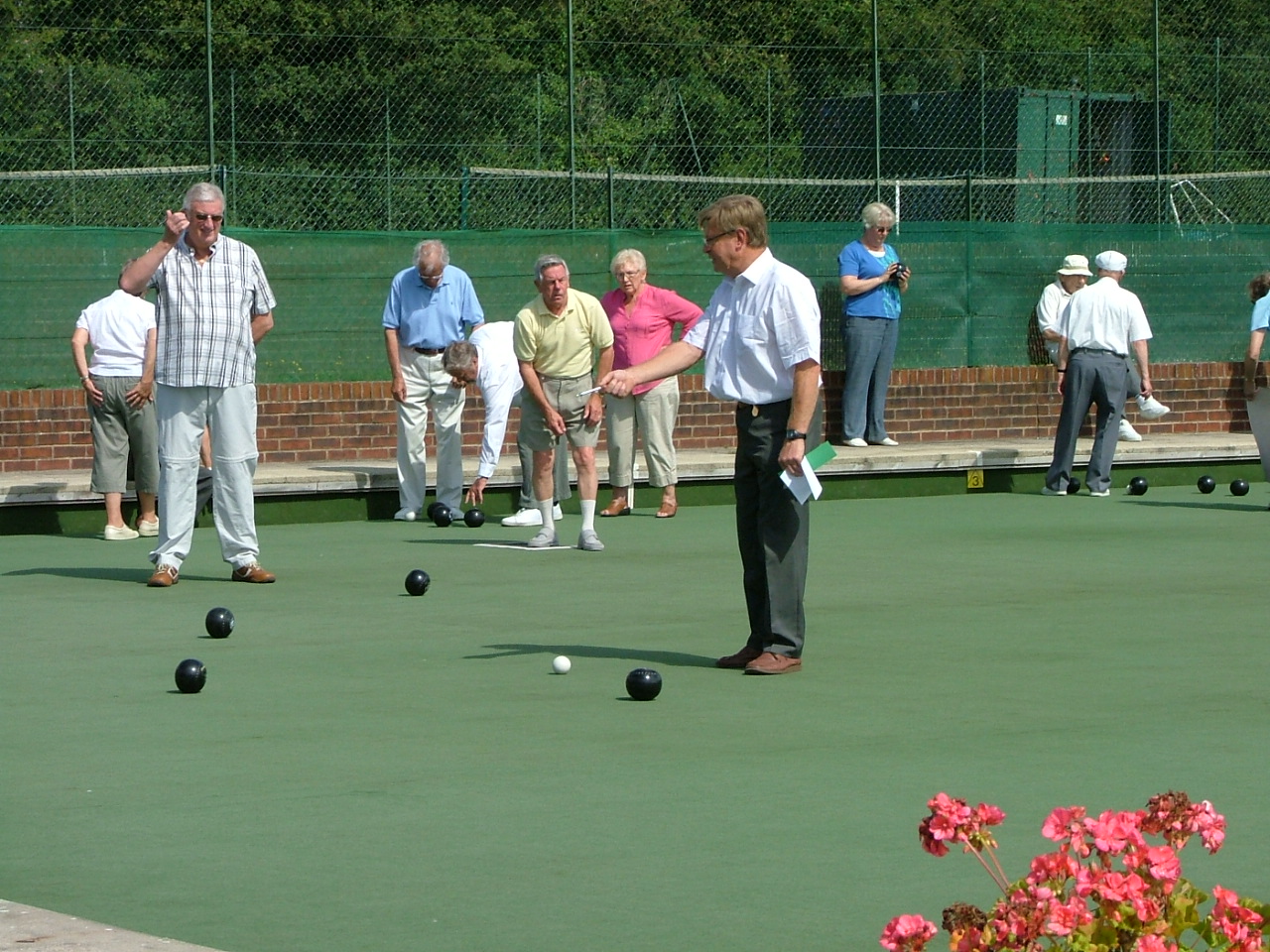
Bowls Etiqettee.
Lawn bowls etiquette refers to guidelines that control the way responsible players behave when playing the game. These rules ensure an enjoyable experience for everyone on the green. They are simple, common-sense rules that can be followed easily. Let’s explore some of the key points:
- 1. Be on Time: Arriving promptly for a game is essential. It shows respect for other players and allows time for equipment setup and familiarization with the game.
- 2. Dress Appropriately: Know the dress code for lawn bowls and pack your gear in advance. Avoid arriving in your bowling shoes to prevent any potential harm to the greens.
- 3. Stand Still When Someone is About to Bowl: Lawn bowling requires concentration. Avoid moving around when someone else is playing. If you’re at the head, wait until the bowler finishes before moving. Stand at least one metre behind the mat and avoid casting shadows on the jack.
- 4. Be Alert as You Walk Around Adjacent Rinks: Many clubs organize their rinks in parallel. Be aware of adjacent games and avoid distractions while walking around the greens.
- 5. Observe the Rules of Possession: Understand the correct sequence of play and follow it. Wait your turn patiently.
- 6. Acknowledgments are in Order: After a good bowl, acknowledge it with a nod or a friendly word. Good sportsmanship enhances the game.
- 7. Do Not Drop That Bowl: Handle your bowls carefully. Dropping them can damage the greens and disrupt play.
- 8. Enter and Leave the Mat on the Right Side: Follow the correct path when stepping onto or off the mat. This helps maintain order and prevents unnecessary interference.
- 9. Send Signals from the Head End: Use signals to communicate with your team. Avoid unnecessary noise during play.
- 10. Shake Hands: After the game, shake hands with opponents as a sign of respect and good sportsmanship.